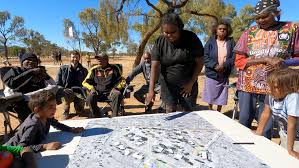
Guide Banner

Policy, Advocacy and Administration

Expert
guidance
for success

Navigating your path to
career excellence

<<

Policies and Strategies


Effective WIL experiences are underpinned by a clear and coherent strategic vision. 

At WIL Australia, our WIL advocacy is guided by the collaboratively developed National Strategy on WIL in Higher Education.

This national strategy, developed in consultation with universities, industry, and government, provides a roadmap for elevating quality, equity, accessibility, and impact of WIL activities across Australia. 

The shared vision within the National WIL Strategy is to ensure every Australian tertiary student has access to a quality WIL experience.


WIL Australia’s Advocacy Priorities

WIL Advocacy AreasKey Considerations 
Commonwealth Prac Payments

Financial strain on students undertaking placements.

The need for equitable support for unpaid placements.

International student work capWork hour cap limits impact quality education, student livelihood and skill development; greater flexibility is needed.
PhD InternshipsIntegration of research students into industry benefits innovation & ensure more research students opt for industry aligned career trajectories.
Education and employmentEvidence-based sustainability and future scope of WIL funding for institutions delivering WIL activities. 
Safe WIL for safe communitiesEnsure safe, inclusive WIL experiences; address systemic risks by deeper collaborations across stakeholder groups.
Indigenous opportunitiesPromote Indigenous perspectives and leadership within WIL frameworks.
Supporting broad WIL accessAddress structural barriers; expand participation pathways in WIL to include underrepresented student groups.
Diversifying WIL modelsExpand recognition of the value of diverse WIL models beyond traditional placements.
Co-Designing WIL with industryStrengthen mutual value and trust in partnerships across employment, community and education sectors.
University investment in WILAdvocate for sustained, strategic prioritisation of realistic and equitable WIL funding models that benefit all stakeholders.
Card Image

Government and Advocacy Resources

WIL Australia is the lead advocate for Work-Integrated Learning in Australia. We work closely with government ministers, departments, policymakers and industry leaders to champion the critical role of WIL in driving national productivity, innovation, and social mobility.

Our advocacy is guided by the National Strategy on WIL in Higher Education, which calls for strong government partnership and investment.

Our Key Advocacy Priorities

Card Image

Securing Sustainable Investment

We advocate for sustainable funding models that recognize the key contributions of all stakeholder groups including universities, industry, and government. This includes targeted programs to support access and equity for underrepresented student groups.
Card Image

Informing National Policy

We provide evidence-based advice to government and other entities (e.g., Universities Australia, Tertiary Education Quality and Standards Agency, Australian Tertiary Education Commission, etc.) to ensure that national policies on skills/capabilities, education, and employment recognise and support the value of WIL.
Card Image

Promoting WIL as a National Asset

We work to raise the profile of WIL as a key driver of graduate employability and a vital component of a skilled future workforce. For example, by including items in the national Graduate Outcomes Survey.
Card Image

Streamlining Regulation

We collaborate with government to address regulatory barriers and create a more supportive environment for universities and employers to offer authentic WIL activities.
Card Image

Metrics and Impact Resources

Measuring the impact of WIL is essential for demonstrating its value, to drive continuous improvement, and to build a compelling case for WIL funding models.

Our approach to metrics and impact is grounded in the Quality WIL Framework, which emphasises the importance of measurable learning gains and the successful evaluation of WIL programs. 

Our approach also aligns with the National Strategy on WIL in Higher Education’s call to build a robust evidence base for effective scaling of WIL across the economy.

Key areas for measuring impact include

Card Image

Student Outcomes

Assessing impact of student employability skills through the national Graduate Outcomes Survey, and exploring ways to link to effectiveness of WIL models, career clarity for students, and graduate employment outcomes.
Card Image

Partner Benefits

Evaluating the value that WIL students bring to industry and community partners (beyond skills to capabilities), including contributions to projects, innovation, workforce development, and talent pipelines.
Card Image

Institutional Benefits

Measuring the impact of WIL on institutional reputation, student satisfaction, and the value generated by academics and professional staff including but not limited to strengthening of curricula.
Card Image

Economic and Social Impact

Demonstrating the broader contribution of WIL to national productivity, innovation, and community development through recognition that quality WIL experiences extend beyond simple skill acquisition.
Card Image

Program Administration Resources

Effective administration is the backbone of any successful Work-Integrated Learning program. It ensures a seamless and supportive experience for students, academic staff, and industry partners.

The Quality WIL Framework highlights "Institutional Requirements" as a critical domain for success. This includes having clear goals, robust policies, effective governance, and dedicated resources to support WIL activities.

Considerations for Program Administrators

Card Image

Policy and Governance Templates

Access examples of good practice policies, procedures, and governance structures to support institution-wide WIL.
Card Image

Partnership Management Tools

Find resources for developing and managing sustainable and mutually beneficial partnerships with industry and the community.
Card Image

Student Support Services

Learn about effective models for preparing students for WIL – including orientation programs, readiness assessments – together with ongoing support during their experiences, and reflective practices at the end of the WIL activity.
Card Image

Data Management

Explore systems and processes for effectively tracking student placements, managing partner information, and collecting data for reporting, quality assurance, and program improvement.

Good Practice Resources and Examples

Information Panel Image

UNSW: Resources for WIL staff and students

Work Integrated Learning (WIL) at UNSW enables students to work directly with industry and community partners for credit towards their degree.

View More

Information Panel Image

RMIT WIL Teams: Dedicated resources for large-scale program delivery

Work Integrated Learning (WIL) at RMIT is an educational approach that uses relevant work-based experiences to allow students to integrate theory with the meaningful practice of work as an intentional and assessed component of the curriculum.

View More
Information Panel Image

Quality WIL Framework evaluation tool

This is the University of Tasmania's Work Integrated Learning (WIL) Evaluation Tool User Guide. 

View Resource
Card Image

Quality Framework Resources

Quality is a cornerstone of meaningful and impactful WIL. 

WIL Australia is proud to be a sector leader and partner of choice for advocating and developing quality and inclusive WIL – including through the nationally recognised Quality WIL Framework.

The framework was developed through extensive research and consultation with the sector to provide a shared language and structure for assuring the quality of WIL. It is designed to be flexible and adaptable to the diverse models and contexts of WIL.

The Four Domains of the Quality WIL Framework

Card Image

Student Experience

Focuses on providing students with a well-supported, safe, and educationally sound learning journey before, during, and after their WIL experience.
Card Image

Curriculum Design

Ensures that WIL is purposefully designed and integrated into the curriculum, with authentic assessment and clear alignment to learning outcomes.
Card Image

Stakeholder Engagement

Promotes active, respectful, and mutually beneficial engagement with all stakeholders, including students, industry partners, and community organisations.
Card Image

Institutional Requirements

Highlights the need for strong institutional commitment, clear governance, policies, and resourcing to enable high-quality WIL experiences that benefit all WIL stakeholders.

Additional Resources

Information Panel Image

Quality WIL Framework evaluation tool

View
Information Panel Image

An Institutional Framework for Scaffolding Work-Integrated Learning Across a Degree

Read More
Information Panel Image

TEQSA Threshold Standards

Read More
Card Image

Risk Management Resources

Managing risk is a critical professional responsibility in the delivery of all WIL activities and is an integral part of ensuring a quality WIL experience. 

A proactive approach to risk management in WIL – with ongoing review and refinement – protects students, industry and community partners, as well as educational institution,.

While not a separate domain, risk management principles are embedded throughout the Quality WIL Framework.

Key Areas of Risk in WIL

Card Image

Student Safety and Wellbeing

Review anticipated WIL environments to ensure the physical, psychological, and cultural safety of students in all WIL settings. This includes thorough site assessments, clear emergency procedures, adequate student support, and debriefing procedures.
Card Image

Professional and Reputational Risk

Ensure policies and procedures to manage risks related to professional conduct, confidentiality, intellectual property, and the reputation of all parties involved.
Card Image

Logistical and Financial Risk

Address potential challenges related to placements, travel, insurance, reimbursement, and student financial hardship.
Card Image

Compliance Risk

Ensure all WIL activities comply with relevant legislation, regulations, and institutional policies, including fair work standards, health and safety laws, privacy legislation, and reporting requirements.

Example Resources

Card Image

Guides & Templates

https://res.cloudinary.com/tektoniclabs/image/upload/v1759214637/wil-australia/acen_logo_repeatedx8_8b3a373314.jpg
Members

Practical guidelines for using the framework

This framework guides institutions in assuring quality in work-integrated learning through curriculum, outcomes, and policies.

View Resource
https://res.cloudinary.com/tektoniclabs/image/upload/v1760323044/wil-australia/students_at_desk_2_a927e62a54.jpg
Members

Industry/Community Guide for Online WIL

This guide is intended for industry and community partners, not-for-profit organisations and government bodies who are considering offering placements.

View Resource
https://res.cloudinary.com/tektoniclabs/image/upload/v1754569431/wil-australia/Inclusive_WIL_be1b2e2d45.jpg
Members

Inclusive WIL – Principles, Guidelines and Strategies

The principles, guidelines and examples of implementation strategies presented here are intended to assist universities to address equity and access issues by developing more inclusive approaches to the way WIL is conceived and practiced.

View Resource

Get involved

WIL Australia acknowledges the Traditional Owners of the lands where we live, learn and work. We pay our respects to Elders past and present and celebrate the stories, culture and traditions of all First Nations people.

Scroll to Top